
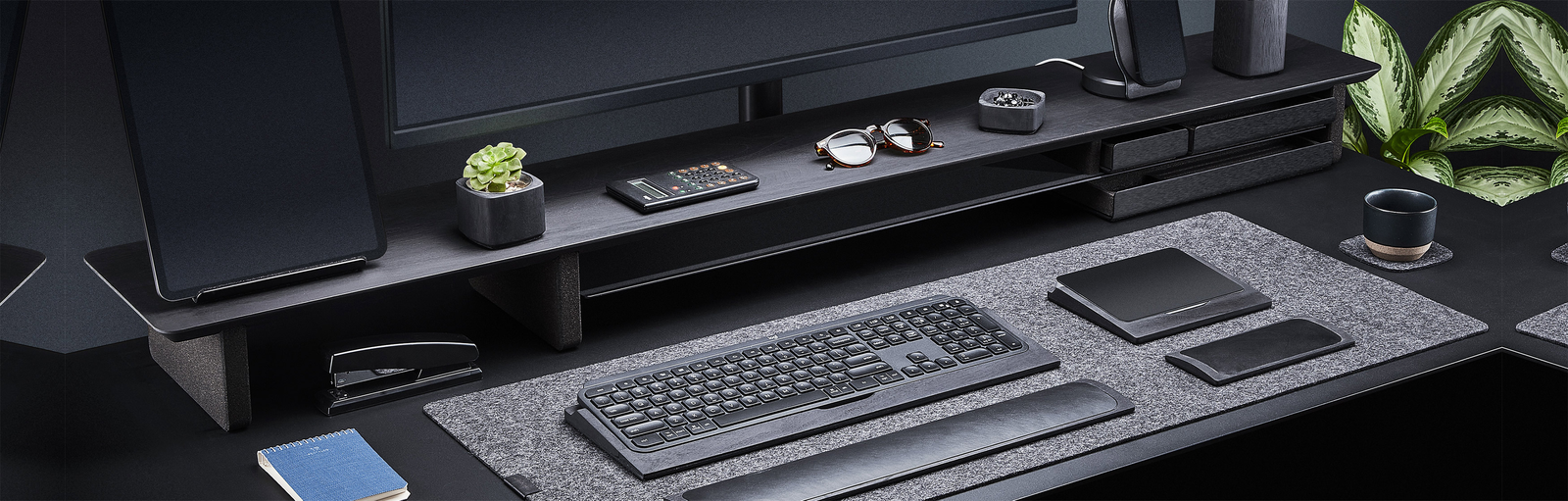
Behind the Scenes
From Wood to Workspace
Before an object finds a place on a desk, it begins with a question about use. A look at the design decisions that connect material, form, and everyday routines.
READ MOREA calmer desk begins with a few considered choices: room to work, a place for everyday objects, and materials that feel at home around you.
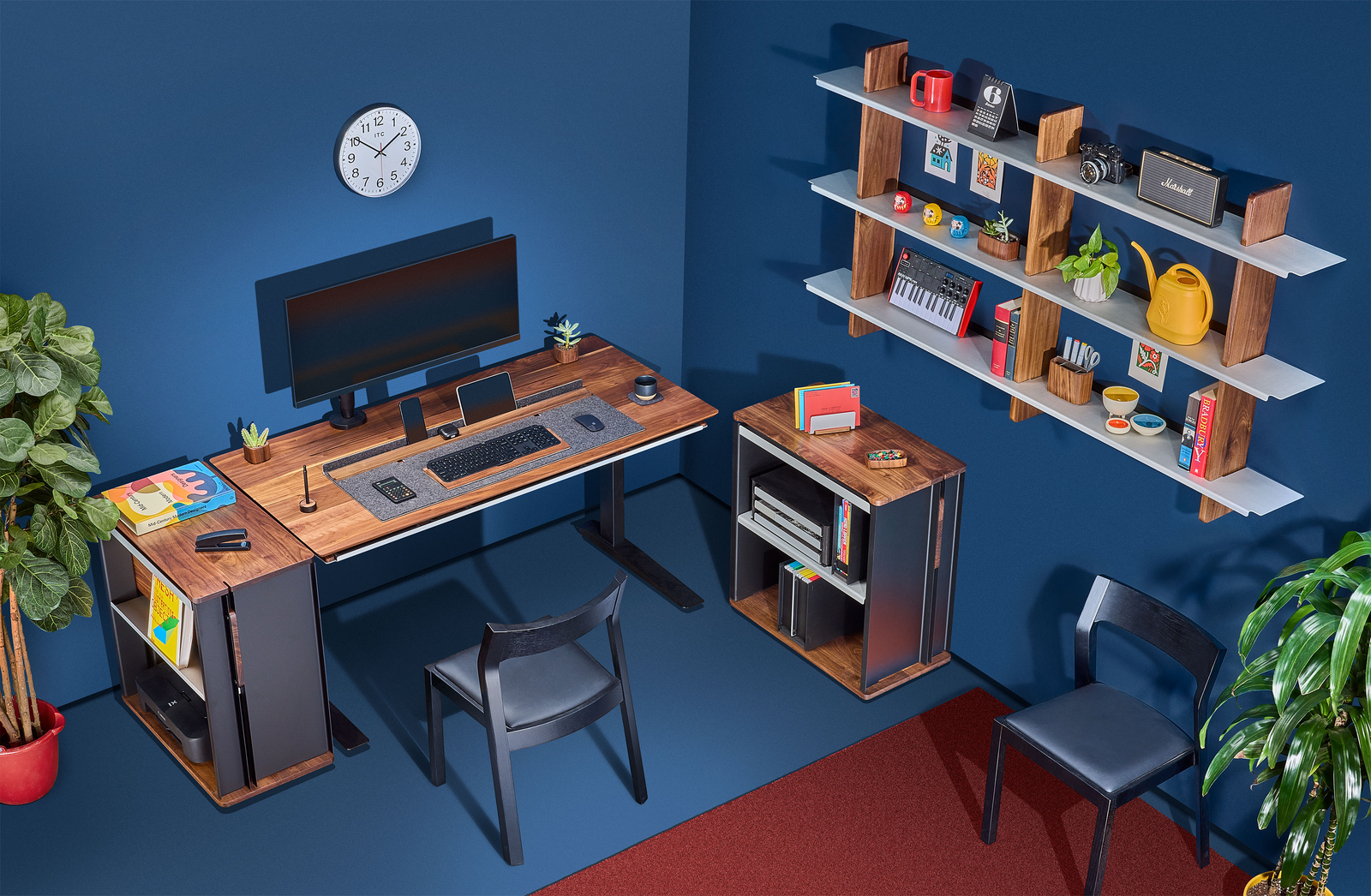
A workspace does not need to be empty to feel calm. It needs to make sense to the person using it. A notebook left open, a favourite pen, and a cup within reach can belong on a desk just as naturally as a clear stretch of surface. The difference is intention: each object has a reason to be there, and each activity has enough room to happen. At TideCool, that is where a considered workspace begins. Before choosing an accessory, notice your daily movements. Where do you put your phone when you sit down? Which tools do you reach for without thinking? What do you move aside every time you begin? Those small observations offer a more useful starting point than a perfectly styled photograph.
Start with the part of the desk where work actually happens. Leave enough space for your keyboard, sketchbook, or the task that occupies most of your day. Then arrange supporting objects around that space. Keep frequently used tools close; let occasional supplies live in a drawer or on a nearby shelf. Materials can help the arrangement feel coherent without making everything match. Warm wood beside a quiet metal surface, a soft desk mat beneath a keyboard, or a single plant at the edge of a shelf can bring contrast without competing for attention. Repeating one tone or finish is often enough to connect different objects. You do not need to replace a useful item simply because it is not part of a matching set.
The final layer is a routine, rather than another object. At the end of the day, return a few essentials to their places and leave the next task somewhere obvious. A short reset can be more useful than an elaborate storage system that is difficult to maintain. A calmer workspace is not a finished composition. It changes with your tools, your habits, and the work you want to do. Make one adjustment, live with it, and notice what becomes easier. Thoughtful design should leave room for you.
Before an object finds a place on a desk, it begins with a question about use. A look at the design decisions that connect material, form, and everyday routines.
READ MORE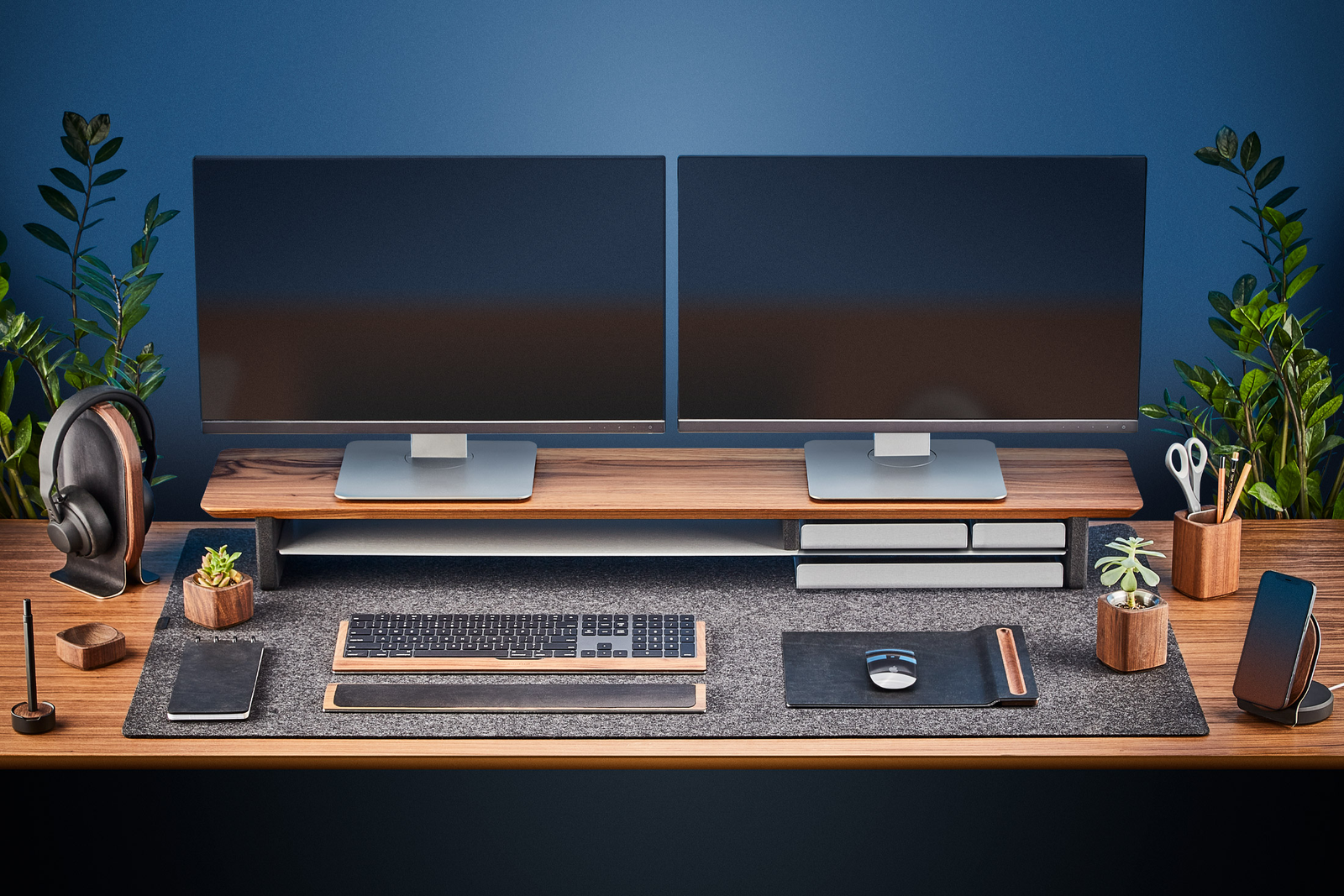
A small room can hold many ways of working. Clear zones, useful vertical space, and a few personal objects help a studio feel open to possibility.
READ MORE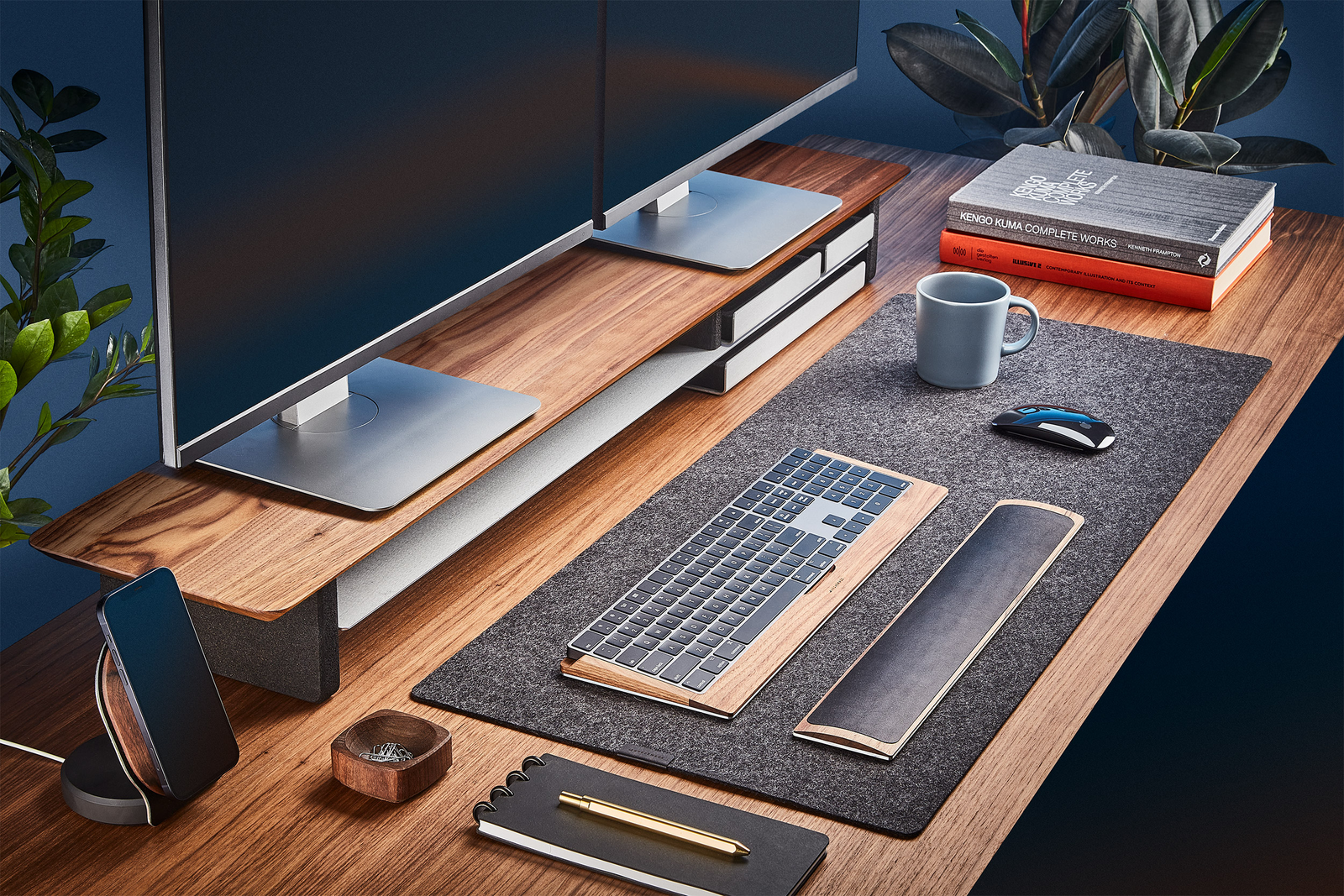
A place for the small things, with walnut at the centre of the story. An introduction to the design thinking behind a more considered desk organizer.
READ MORE